
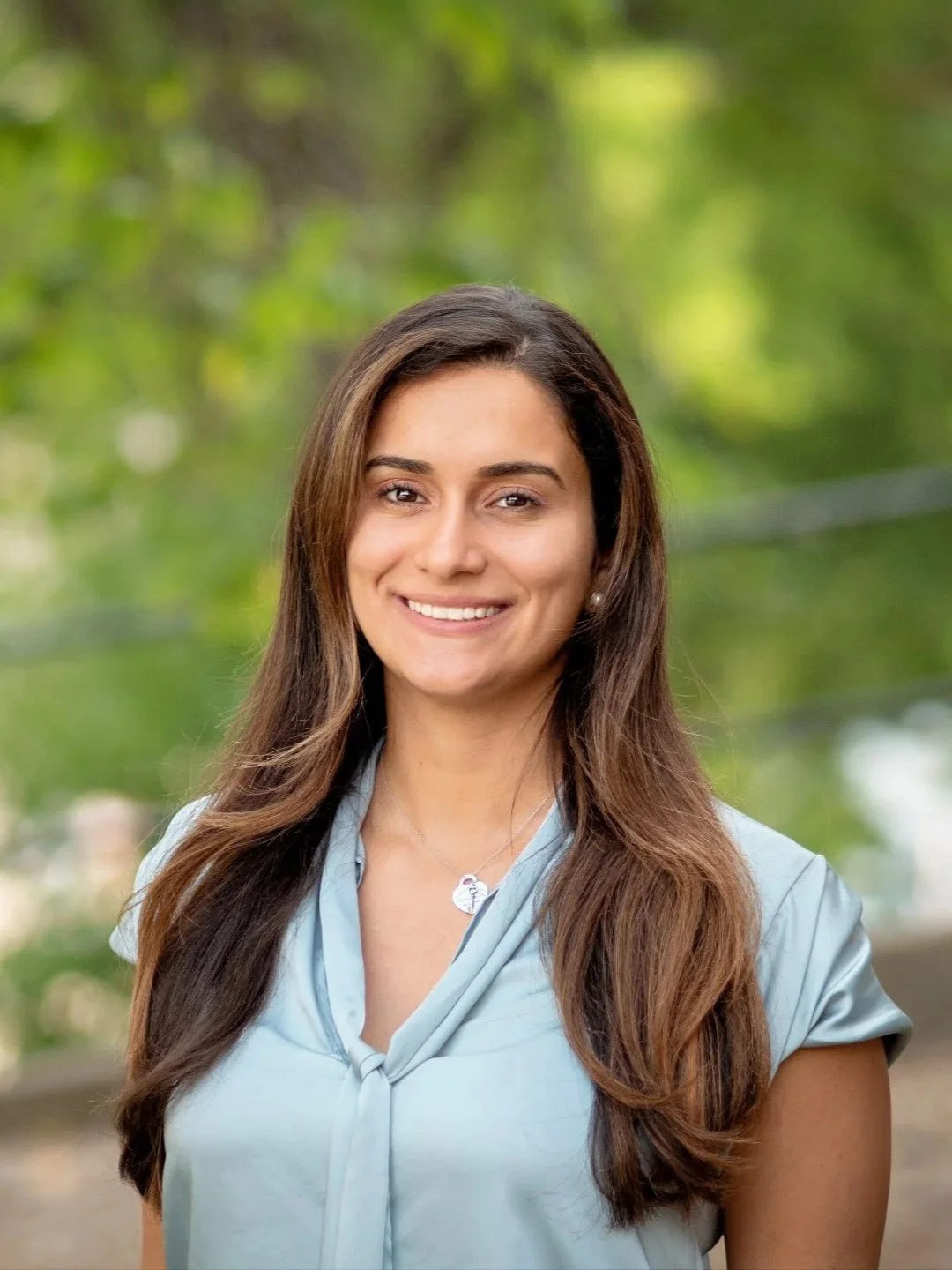
Dima L. Chaar, PhD, MHI
Research Postdoctoral Fellow, Kaiser Permanente Northern California Division of Research
Can you describe the research you’re working on as part of TIME-AD?
As part of TIME-AD, I am working on Project 3 to investigate the relationship between vision disorders and Alzheimer’s disease (AD). Specifically, I am studying whether there is a causal relationship between genetically-determined cataract, primary open-angle glaucoma and age-related macular degeneration, and AD, using the two-sample Mendelian randomization approach.
What’s been the most exciting or rewarding aspect of your research to date?
The most exciting aspect of my research has been to address public health questions of human health and disease through rigorous statistical analysis at the interface of genomics, statistics and computer science. The possibility that genetic data can help identify early biomarkers and guide more tailored prevention strategies for ADRD, and other diseases, truly motivates me. It has been especially rewarding to work with collaborative and insightful researchers dedicated to pushing the field forward.
What inspired you to get involved in ADRD research?
I became involved in ADRD research through my dissertation, ‘Socio‑Contextual and Multi‑Omic Associations with Cognitive Function and Structural Brain Measures in Older African Americans,’ where I used genetic, epigenetic, and transcriptomic data, as well as their interplay with socio-contextual factors, to investigate pathways related to ADRD, vascular dementia, and cognitive function. This work highlighted how powerful multi‑omic and genomic approaches are for detecting early biological signals and advancing precision medicine strategies that can ultimately transform prevention and care.
What’s a common misconception about science or research that you wish more people would challenge?
A common misconception is that science delivers quick, definitive answers. In reality, it is a gradual process. Each discovery, even small, moves the field closer to earlier detection, better prevention, and healthier aging.
What do you enjoy doing outside of work?
I love traveling and exploring new places with my husband. We especially love to explore San Francisco on the weekends! We are addicted to Arsicault’s croissants.
What’s a fun fact about you that most people don’t know?
I am a classically-trained pianist and a retired ballerina.
If you weren’t a scientist, what do you think you’d be doing?
I would probably be an artist - I love to draw and paint.
What’s a book, podcast, or movie you’ve loved recently?
“There are Rivers in the Sky” by Elif Shafak.