
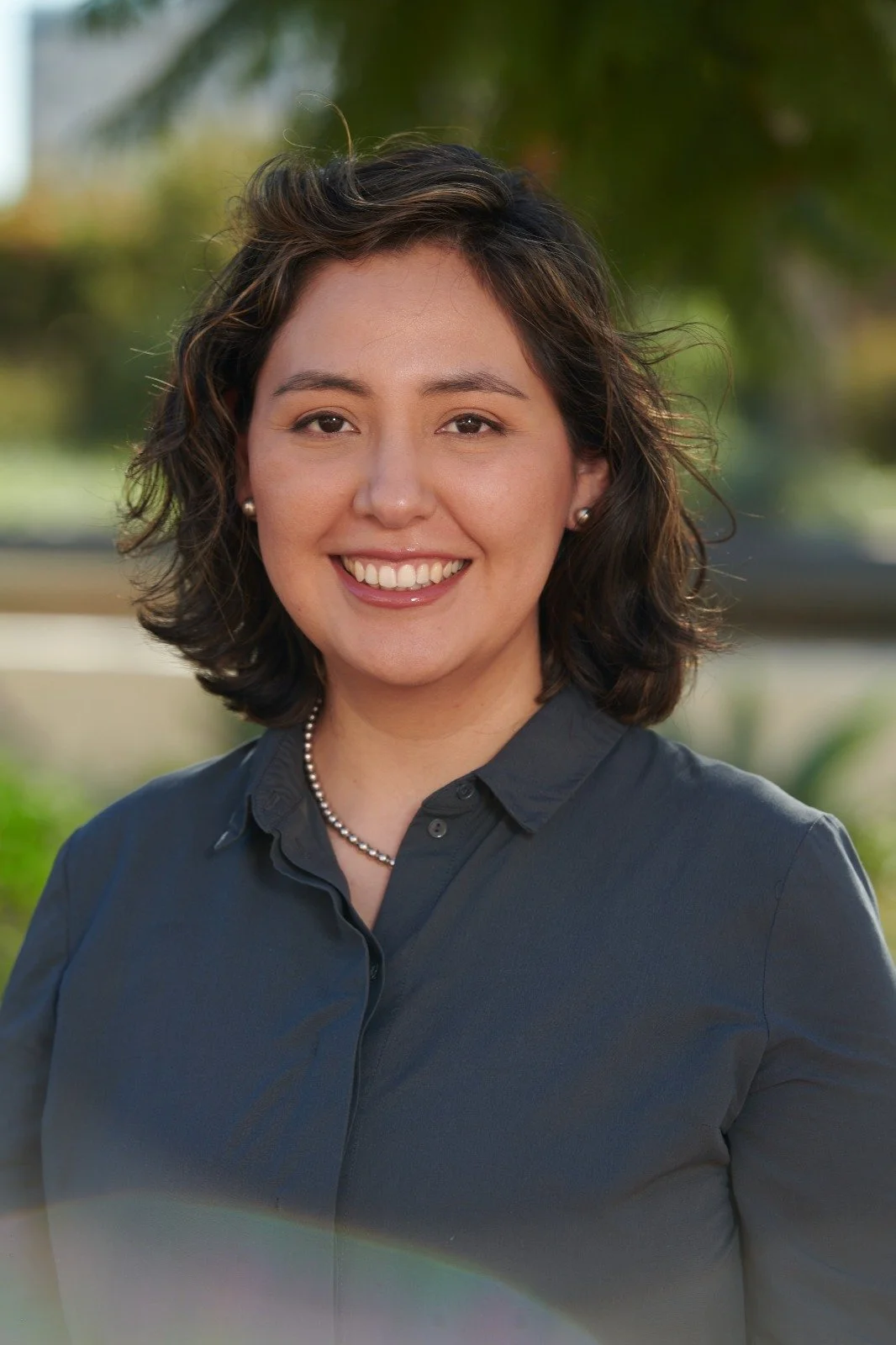
Liliana Paloma Rojas Saunero
Postdoctoral Scholar, UCLA
Can you describe the research you’re working on as part of TIME-AD?
As part of the Analytics Core, I am currently working on extending the application of causal estimands that account for competing/truncation events in AD/ADRD related outcomes, and supporting peers who are interested in target trial emulation.
What’s been the most exciting or rewarding aspect of your research to date?
What excites me the most is developing and applying causal inference thinking and tools to refine the way we ask questions using observational data, in a way that our results are more interpretable and more aligned with potential interventions. I am also very excited about expanding our understanding of how death, as a competing or truncation event, impacts any estimation of dementia-related outcomes, and about helping epidemiologists and applied practitioners see how different analytic choices can lead to very different, sometimes even opposite, conclusions.
What inspired you to get involved in ADRD research?
I initially transitioned from liver transplant research into ADRD research through an opportunity to pursue a PhD focused on causal inference methods for time-varying exposures and longitudinal outcomes. I stayed in ADRD research because there is still so much we don’t know about how to prevent or delay dementia, and because the research community in this area is incredibly smart, generous, team-oriented and kind.
Why is your work important, and what do you wish more people understood about it?
There are many ways to analyze the same data, and depending on the design choices we make and statistical tools we use, we can arrive at very different conclusions, and potentially introduce bias without realizing it. My work emphasizes stepping back from the data to carefully refine the research question, so it aligns clearly with a specific analytic approach. Doing so helps anticipate and prevent sources of bias and leads to results that are directly connected to the question we set out to answer.
If you could change one thing about how research is done or communicated, what would it be?
I have a strong mission on helping researchers stop from reporting and communicating hazard ratios, and instead report risk differences and risk ratios based on cumulative incidence at defined time points.
What do you enjoy doing outside of work?
Spending time with my family, trying new foods, traveling and listening to music and audiobooks.
What’s a fun fact about you that most people don’t know?
I built my academic career across multiple countries, beginning in Bolivia, then Argentina and Mexico, the Netherlands, and now the United States.
What drew you to science in the first place?
I was drawn to science early on through my mom, who is a pediatrician and taught me that medicine is a blend of science, quantitative thinking, art and creativity. That perspective shaped how I approach research to this day.
Who’s a scientist or mentor that’s influenced you most?
My mom.
If you weren’t a scientist, what do you think you’d be doing?
Probably I would be a software engineer
What’s a book, podcast, or movie you’ve loved recently?
Having It All, by Corinne Low