
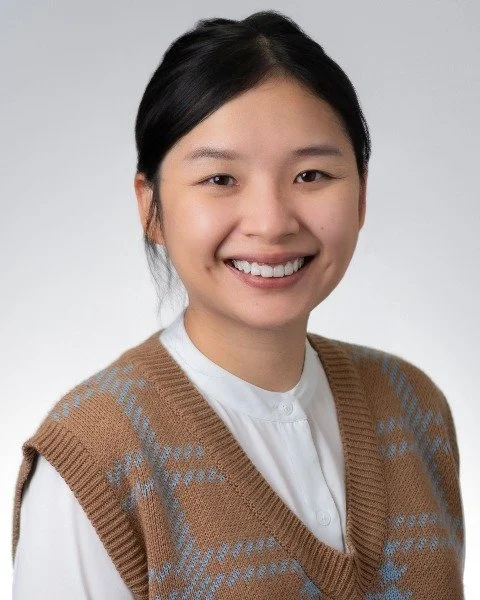
Ruijia Chen
Postdoctoral Associate at Boston University
Incoming Assistant Professor at the UCLA Fielding School of Public Health
Can you describe the research you’re working on as part of TIME-AD?
I mainly work on Project 4 of the TIME-AD. My colleagues and I apply epidemiologic methods to study the relationship between social isolation and dementia risk. For example, using data from the UK Biobank, we examined the relationship between Alzheimer's disease genetic risk scores (AD-GRS) and social isolation to disentangle reverse causality in the association between social isolation and dementia risk. In another study I am currently leading, we investigate whether variations in how social isolation is defined lead to differences in findings on the estimated impact of a hypothetical social connectedness intervention on cognitive function. The P4 team is tackling several important methodological challenges in studying social isolation and dementia, and I am glad to be a part of it.
What inspired you to get involved in ADRD research?
I first got involved in aging and ADRD research about 14 years ago, when I worked on a community-based participatory research project focused on the health and well-being of immigrant older adults in Chicago. That experience completely changed how I understood aging.
In that job, I spoke with hundreds of immigrant older adults and their family members. My colleagues and I partnered with community centers and senior housing facilities to develop health education workshops and facilitate focus groups on topics such as depression and dementia. Those conversations helped me see how deeply social context shapes the experience of aging.
What stayed with me most was the clear contrast between older adults living in ethnic enclaves and those living in more isolated suburban areas. In ethnic communities, even when resources were limited, there were dense social networks, shared language and culture, and informal systems of support. There was a sense of belonging. In contrast, I met several highly educated older adults who had migrated to suburban Chicago and found themselves extremely alone. Language barriers, transportation challenges, and scattered family networks lead to a high prevalence of social isolation. Some described days passing with little meaningful interaction, and spoke quietly about depression and even experiences of neglect or elder abuse. It became very clear to me that the social environment where someone lives, who surrounds them, and what support systems exist really shape levels of stress, access to care, and ultimately mental, physical, and cognitive health.
Those early experiences motivated me to pursue training in the social epidemiology of aging and ADRD. I wanted to move beyond describing disparities and begin to understand the social structures that create them and to identify ways community and policy interventions could reduce risk and promote health equity among older adults.
Do you have a perspective or ‘unpopular opinion’ about your field that you think deserves more attention?
As a social epidemiologist, like many others, I am very excited about applying innovative methods to understand how social conditions shape health. However, one somewhat unpopular view that I have is that increasingly complex or “fancier” methods do not always lead to better science. There is a trend in some fields to equate methodological complexity with rigor, as if adding more complexity to the models necessarily leads to deeper insight. However, for many research questions, careful descriptive analyses and clear causal frameworks often offer more meaningful contributions than highly technical models that are difficult to interpret or reproduce.
I also believe that the role of theory is often undervalued in public health training and research. I’ve felt this more strongly lately after seeing many studies in dementia research published associations between variables without a clear mechanistic rationale. Theory shapes the questions we ask, the populations we include, the variables we prioritize, and the mechanisms we consider plausible. Even when not explicitly articulated, our studies reflect underlying assumptions about how the world works. Without strong theoretical grounding, research risks being driven by data availability rather than conceptual clarity.
The rapid development of AI and large-scale computational tools now makes it easy to examine thousands of associations across different (sometimes random) variables. We are already seeing, including in high-impact journals, an increasing number of large observational studies that link variables without a clear conceptual or mechanistic foundation. This trend is concerning. Of course, no single theory can explain everything, and as the world evolves, theoretical frameworks should be tested, challenged, and refined. But in my view, the faster AI develops, the more important it becomes to strengthen foundational theoretical training in public health.
What do you enjoy doing outside of work?
I really enjoy spending time with my family, whether that’s visiting local parks, exploring children’s museums and science museums, or taking trips to national parks. I’ve made some wonderful friends through my five-year-old, and the playdates among kids have often turned into meaningful connections with other families. It has become an unexpectedly joyful part of my social life.
Who’s a scientist or mentor that’s influenced you most?
I feel incredibly fortunate to have had many mentors who have supported my career development and been generous with their time and guidance, including several involved in Time-AD. I’ve also been lucky to have wonderful peer mentors, some of whom I’ve known since my doctoral training. Over the years, we’ve become close friends and continue to learn from and support one another. It’s honestly difficult to name just one person.
More recently, Dr. Maria Glymour has had a particularly strong influence on me. She shaped my vision for social epidemiology and modeled the kind of mentorship (thoughtful, rigorous, generous, and supportive) that I hope to offer my mentees.